- The Hidden Drain: Understanding Passive Solar Energy Loss
- Turning Loss into Gain: How Solar Panels Capture Your Roof’s Potential
- Understanding Solar System Costs and ROI
- How to Choose the Right Solar Provider: A Homeowner’s Checklist
- What to Expect During the Solar Installation Process
- Maintaining Your Solar Investment for the Long Term
- Frequently Asked Questions
Every day, your home is sitting on a goldmine of free energy, and you’re letting most of it literally slip through the roof. This isn't a metaphor. Your property is constantly absorbing solar radiation—light and heat from the sun. While this passively warms your home in winter, a massive amount of this energy is wasted, radiating back into the atmosphere. The untapped potential on your rooftop represents a significant, silent financial drain. The direct solution to this problem is a residential solar panel system, which actively captures and converts this otherwise lost resource into usable electricity. This article will explore the concept of passive solar energy loss, quantify its cost, and detail how installing a solar array transforms your roof from an energy-waster into a personal power plant.
For homeowners and property managers, the decision to go solar is often framed around environmental benefits or available incentives. While those are powerful motivators, the most compelling case is economic. Think of your roof not just as shelter, but as real estate. Right now, that real estate is generating zero revenue while being bombarded with a valuable commodity. By installing solar panels, you're developing that property. You're putting it to work for you 24/7, converting sunlight into kilowatt-hours that slash your utility bills. The process starts with recognizing the loss and ends with selecting the right partner to capture the gain.
The Hidden Drain: Understanding Passive Solar Energy Loss
Your home’s envelope—its roof, walls, and windows—is in a constant, silent exchange with the environment. On a sunny day, your roof can reach temperatures exceeding 150°F. That heat doesn't just sit there; it transfers into your attic and, eventually, your living spaces. In summer, this creates a massive burden on your air conditioning system, which must work overtime to counteract this solar heat gain. In winter, while some heat is welcome, much of the energy absorbed during the day is lost at night as your roof radiates heat back into the cold sky. This cycle represents a double loss: you pay to mitigate unwanted heat, and you fail to store the heat you want.
The financial impact is measurable. The Department of Energy estimates that 25% to 30% of residential heating and cooling energy use is lost through the roof. For a household with an annual energy bill of $2,400, that translates to $600 to $720 literally vanishing into thin air each year. This isn't a one-time cost; it's a perpetual, compounding drain on your finances that increases with rising utility rates. The inefficiency is built into the traditional design of most homes, which treat the roof as a passive barrier rather than an active asset.
Important
This energy loss isn't just about temperature. It also represents the complete waste of the sun's photon energy, which could be generating electricity. Every kilowatt-hour of solar energy that strikes your roof and isn't captured is a direct financial opportunity missed.
Beyond the attic, windows and south-facing walls contribute significantly to this dynamic. While modern low-E windows help, they don't generate power; they only reduce loss. The fundamental shift in thinking is to stop viewing sunlight as a thermal management problem and start seeing it as a revenue stream. This is where active solar technology changes the equation entirely. Instead of simply trying to insulate against the sun's effects, you harness its core power.
The sun delivers more energy to your roof in a single hour than your entire household uses in a day. Capturing even a fraction of this turns a persistent cost center into a powerful financial asset.
Turning Loss into Gain: How Solar Panels Capture Your Roof’s Potential
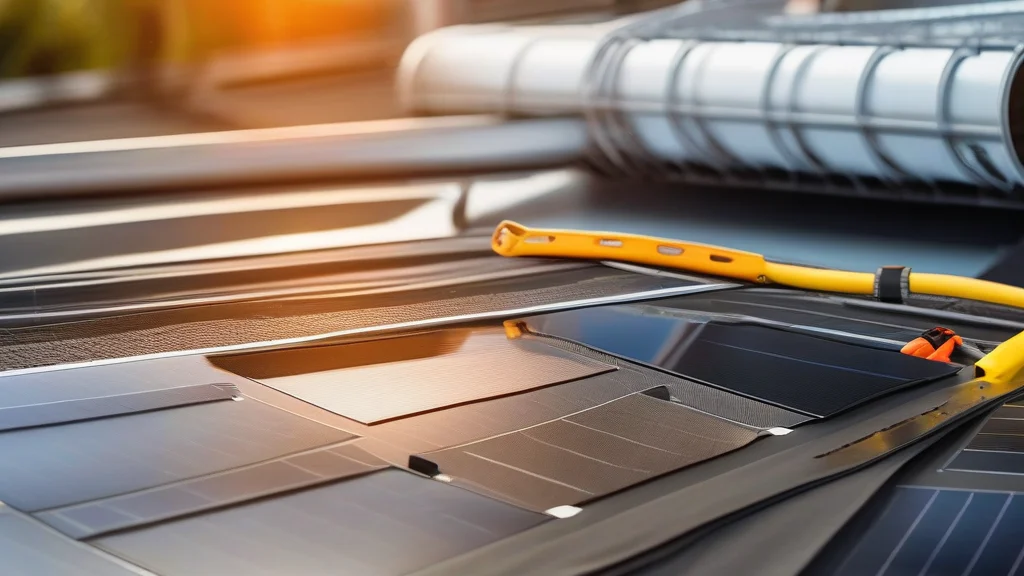
Solar photovoltaic (PV) panels are the direct technological answer to passive energy loss. They intercept the sun's photons before they can become problematic heat, converting them directly into direct current (DC) electricity. This process, called the photovoltaic effect, actively monetizes the solar resource hitting your home. A typical system consists of panels, inverters that convert DC to usable AC power, racking, and a monitoring system. Together, they form a miniature power plant tailored to your roof's specific dimensions and sun exposure.
The efficiency of modern panels is the game-changer. While your dark roof shingles might absorb 90% of sunlight as heat, high-efficiency solar panels can convert over 22% of that sunlight into electricity. More importantly, they reflect a portion of the remaining energy, reducing the thermal load on your roof. This means a home with solar panels often has a cooler attic than a home without, providing a secondary benefit of reduced cooling costs. The system doesn't just add power; it mitigates the original problem of heat gain.
Net Metering: Banking Your Excess Solar Power
A critical component of the solar value proposition is net metering. This is a billing arrangement with your utility company. When your panels produce more electricity than your home needs—on a bright, sunny day when you're at work—the excess flows back to the grid. Your meter literally runs backward, and you earn credits. At night or on cloudy days, you draw power from the grid, using those credits. Over a 12-month period, this means you only pay your utility for your "net" energy use. For many well-sized systems, this results in a near-zero electric bill, effectively locking in your energy rate for the 25+ year lifespan of the panels.
Advantages of Solar Panels
- Eliminates Passive Loss — Actively converts wasted solar energy into bill credits, addressing the core financial drain.
- Fixed Energy Costs — Protects against future utility rate hikes, providing long-term budget predictability.
- Increased Home Value — Studies show homes with solar sell for 4.1% more on average.
- Low Maintenance — Systems have no moving parts and typically require only occasional cleaning and annual inspections.
Considerations
- Upfront Investment — Significant initial cost, though financing and incentives dramatically reduce the barrier.
- Roof Suitability — Requires adequate, unshaded roof space with proper structural integrity.
- Regulatory Variability — Net metering policies and incentives can differ by state and utility provider.
Understanding Solar System Costs and ROI
The biggest hurdle for homeowners is understanding the investment. As of 2024, the average cost for a residential solar system before incentives is between $15,000 and $25,000. This range depends heavily on system size, location, panel quality, and roof complexity. However, this sticker price is misleading. The 26% federal solar tax credit allows you to deduct over a quarter of the total system cost from your federal income taxes. Many states and utilities offer additional rebates, further reducing the net price.
Let's break down a realistic example. A 7.5 kW system in a sunny state might have a gross cost of $22,500. After applying the 26% federal tax credit ($5,850), the net investment drops to $16,650. If that system saves the homeowner $1,800 on electricity annually, the simple payback period is just over 9 years. Given that premium panels carry 25-year performance warranties, you can expect 16+ years
Did You Know?
You don't need to pay for a solar system outright. Many homeowners use solar loans with $0-down options, where the monthly loan payment is less than their former electric bill, creating immediate positive cash flow. Solar leases and Power Purchase Agreements (PPAs) are also available, though they typically offer lower long-term savings.
When evaluating cost, you must think in terms of levelized cost of energy (LCOE). This metric calculates the average cost per kWh over the system's life. For a homeowner, the LCOE of solar is often between 6 and 12 cents per kWh. Compare that to the national average utility rate, which is around 16 cents/kWh and rising annually. Solar flips the script: you become your own power provider at a locked-in, lower rate.
How to Choose the Right Solar Provider: A Homeowner’s Checklist
Selecting an installer is the most critical step in your solar journey. A poor installation can undermine the financial and performance benefits entirely. You’re not just buying equipment; you’re buying 25 years of reliability and service. Start by getting at least three detailed quotes. Reputable companies will provide a site assessment, not just a satellite image, to evaluate shading, roof condition, and electrical panel capacity.
- Verify Credentials and Reviews
Ensure the company is licensed, bonded, and insured. Check for certifications from organizations like the North American Board of Certified Energy Practitioners (NABCEP). Read reviews on multiple platforms (Google, BBB, EnergySage) and ask for references from local customers. A platform like HomeProMatcher simplifies this by connecting you with pre-vetted, licensed local pros, eliminating the need for endless searching.
- Scrutinize the Proposal
The quote should detail panel model and efficiency, inverter type, estimated annual production (kWh), total system cost, warranty terms, and projected savings. Be wary of high-pressure sales tactics or offers that seem "too good to be true." The cheapest bid is often the most expensive long-term choice.
- Understand the Warranties
There are typically three warranties: the equipment manufacturer’s warranty (often 25 years for panels), the installer’s workmanship warranty (usually 5-10 years), and the performance guarantee (ensuring panels produce a certain percentage of their rated output over time). A strong provider stands behind all three.
Red Flags to Avoid When Going Solar
Being an informed consumer protects your investment. Steer clear of companies that won't provide a written contract or that use subcontractors for the entire installation. Avoid door-to-door salespeople who can't provide a local office address or verifiable track record. Be extremely cautious of any offer that requires you to sign a lien on your home property. Finally, if a salesperson is evasive about the total cash price before incentives or pressures you to sign immediately to secure a "limited-time government rebate," walk away. All reputable incentives are claimable by any qualified homeowner who installs within the tax year.
What to Expect During the Solar Installation Process
Once you select a provider, the installation timeline typically spans 1 to 3 months. The process is highly structured. It begins with a final engineering design and securing permits from your city or county—a step your installer handles. The physical installation usually takes 1 to 3 days, depending on system size. Crews will mount the racking, attach the panels, run conduit, and install the inverter(s) and any required monitoring hardware.
After installation, a local building inspector will visit to ensure the work complies with electrical and safety codes. The final step is "Permission to Operate" (PTO) from your utility company. They will install a new net meter, and only then can you flip the switch to start generating power. Throughout this period, maintain communication with your project manager. A quality installer will guide you through each phase and manage all the logistics.
Schedule your installation for the shoulder seasons—spring or fall. Installers are often less busy than in peak summer, potentially leading to faster scheduling. This timing also ensures your system is fully operational before the high-energy-use seasons of winter and summer.
Maintaining Your Solar Investment for the Long Term
Solar systems are famously low-maintenance, but they aren't "install and forget." Basic upkeep ensures you achieve the projected 25+ years of performance. The primary task is keeping the panels clean. In most climates, rainfall is sufficient. However, in dusty areas or if you have bird issues, an annual cleaning with a hose or soft brush may be needed to remove debris that can reduce efficiency. Never use abrasive materials or harsh chemicals.
Monitor your system's output through the provided app or online portal. Establish a baseline for sunny-day production. A sudden, sustained drop in output could indicate an issue like a faulty inverter, a wiring problem, or significant shading from new tree growth. Your installer's workmanship warranty should cover repairs related to the installation itself, while the manufacturer's warranty covers equipment failure.
Your solar panels are a durable, income-generating asset. Protect your investment by choosing a reputable installer, understanding your warranties, and performing simple annual visual checks. The small amount of attention required pays massive dividends in long-term reliability and savings.
Frequently Asked Questions
While south-facing is ideal in the Northern Hemisphere, east and west-facing roofs can still capture 85-95% of the optimal energy. Modern system design software optimizes panel layout and angle to maximize production on any viable roof plane. The key factor is minimal shading, not perfect orientation.
Solar panels increase your home's value and marketability. Studies by Zillow and the Lawrence Berkeley National Laboratory confirm homes with solar sell faster and for more money. You can either pay off any solar loan and transfer the fully owned system to the new buyer, or the buyer can assume the loan/lease, subject to lender approval.
It is highly recommended to replace an aging roof (5-10 years from end-of-life) before installing solar. The panels are designed to last 25+ years, and removing/reinstalling them for a roof replacement mid-lifecycle can cost $3,000 to $7,000. A reputable solar consultant will advise you on this upfront.
Standard grid-tied solar systems automatically shut off during a power outage for safety reasons, to prevent sending electricity back to the grid while utility workers make repairs. To have backup power, you need to add a solar battery storage system, which stores excess energy for use when the grid is down.