- The High Cost of Overlooking Early Signs
- The One Termite Sign You're Probably Ignoring
- Beyond the Obvious: Other Subtle Clues
- From Suspicion to Confirmation: Your Next Steps
- Termite Treatment Options Explained
- Choosing the Right Termite Treatment Professional
- What to Expect: A Realistic Cost Breakdown
- The Long Game: Protecting Your Investment
You notice a few tiny, discarded wings on a windowsill. A door seems to stick a little more than usual. You dismiss it as seasonal humidity or simple aging. This is the exact moment you might be making a $3,000 mistake. The most destructive termite sign is often the one you're trained to ignore. Understanding the subtle, early indicators of termite activity isn't just about pest control—it's about protecting your single largest financial investment from silent, structural damage that can compound for years before becoming visible. A proactive termite treatment plan, initiated at the first hint of trouble, can be the difference between a minor, localized fix and a catastrophic repair bill. This article will decode the signals you're likely missing and provide a clear roadmap for effective action.
Every year, termites cause over $5 billion in property damage across the United States, and most standard homeowners insurance policies explicitly exclude this type of destruction. The financial burden falls entirely on the property owner. The core problem isn't the presence of termites; it's the timeline of discovery. By the time you see the classic mud tubes or obvious wood damage, a colony has likely been established for three to five years, working its way through structural timbers, floor joists, and support beams. Early intervention transforms the entire scope and cost of the necessary termite treatment.
The High Cost of Overlooking Early Signs
Most homeowners envision termite damage as gaping holes and crumbling wood. The reality is far more insidious. Subterranean termites, the most common and destructive type, consume wood from the inside out. They leave a thin veneer of paint or drywall intact, creating a hollow shell that appears perfectly normal until it collapses under pressure. This hidden feeding pattern means visible damage often represents just 10% of the total destruction. The repair costs escalate exponentially because the problem is no longer just extermination; it's reconstruction.
Contrast two scenarios. In the first, a homeowner spots the early, subtle signs we'll detail and calls for an inspection. The pest control professional identifies a nascent colony activity near the foundation. A targeted, localized termite treatment like a direct wood injection or a small baiting system might resolve the issue for $800 to $1,500. In the second scenario, the signs are ignored for years. The eventual discovery leads to a full-structure liquid barrier treatment, fumigation for drywood termites, and $15,000 to $30,000 in structural repairs. The difference hinges entirely on early recognition.
Important
Termite damage is a pre-existing condition in the eyes of insurers and potential buyers. If you try to sell a home with undisclosed or recent termite history, you face significant liability, reduced property value, and failed sale contingencies. A documented history of professional termite treatment and a transferable warranty, however, can be a strong selling point.
The One Termite Sign You're Probably Ignoring
So, what is the most commonly overlooked indicator? It's not wings or mud. It's changes in the acoustic or tactile properties of your wood. Termite-damaged wood sounds and feels different. When you tap on a solid wood beam or stud with a screwdriver handle, it produces a sharp, crisp "knock." Infested wood, hollowed out from within, produces a dull thud or a papery, hollow sound. This simple "tap test" is something you can do during routine home maintenance.
Similarly, prodding wood with a flat-head screwdriver or an ice pick can reveal weakness. Solid wood will resist or make a small puncture. Wood compromised by termites will offer little resistance, and the tool may sink in deeply or break through a thin outer layer into a hollow gallery. You might notice that baseboards or window trim give slightly when pressed, or that a floorboard feels slightly spongy underfoot in a very specific spot. These are not signs of old age; they are active destruction. Ignoring this auditory and tactile feedback is the single biggest error homeowners make, delaying critical termite treatment by months or years.
Perform a quarterly "tap and probe" test on exposed wood in basements, crawl spaces, and around door frames. A hollow sound or easy penetration is a red flag requiring immediate professional inspection.
Why This Sign is So Critical
Auditory and tactile clues often manifest long before visual evidence becomes clear. Mud tubes—those earthen tunnels termites build to travel—are a definitive sign, but they are often hidden behind walls, in crawl spaces, or on foundation interiors. Discarded wings from swarmers are a strong indicator, but they can be swept away or confused with other flying insects. The change in the wood itself, however, is a direct symptom of the infestation's core activity. It tells you that the structural material is being consumed right now, not that termites were merely present in the past.
Beyond the Obvious: Other Subtle Clues
While the hollow wood test is paramount, several other early warnings frequently get dismissed. A comprehensive homeowner's checklist should include these items. Catching any combination of them should trigger an inspection.
- Pinpoint holes in drywall or plaster — Often mistaken for nail pops or settling, these tiny, dark spots can be where termites have broken through the surface membrane from inside the wall to push out debris or find air.
- Bubbling or peeling paint that mimics moisture damage — Termites produce moisture as they digest cellulose. This humidity can get trapped under paint, causing it to bubble. It's easy to blame a leaky pipe, but the source might be biological.
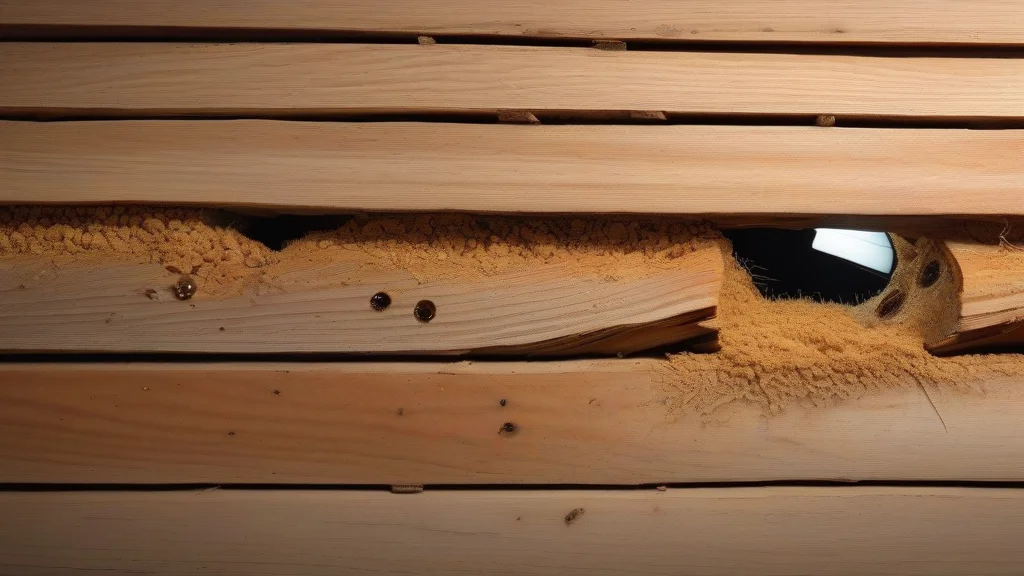
- Maze-like patterns in furniture or wood trim — These "galleries" are often visible on the inside of a piece of wood once it's broken. On the surface, they may only appear as faint, irregular lines or a slight warping of the grain.
- Piles of frass (termite droppings) — Drywood termites push their granular, six-sided droppings out of kick-out holes. These piles resemble fine sawdust or coffee grounds and are a definitive sign of an active colony.
- Unexplained squeaking in floorboards — New or unusual squeaks can indicate that floor joists or subflooring have been weakened and are flexing more under weight.
Seasonal timing matters immensely. Termite swarms (reproductive flights) most commonly occur on warm, humid days following a rain, typically in spring or early summer. Seeing a swarm outside your home is a natural phenomenon. Seeing a swarm inside your home—emerging from a wall or baseboard—means the colony is already established within your structure. This is a five-alarm fire requiring immediate termite treatment.
Advantages of Early Detection
- Lower treatment costs — Localized treatments are far less expensive than whole-structure solutions.
- Minimal structural damage — Preserves the integrity of load-bearing beams and joists.
- Faster resolution — Treatment and clearance can often be completed in a single visit.
- Stronger warranty leverage — Professionals can more confidently offer long-term warranties on a contained problem.
Costs of Late Detection
- Exponential repair bills — Combines extermination with major carpentry and rebuilding.
- Potential for total loss — In severe cases, sections of a home may be condemned.
- Lengthy process — May require tenting for days plus months of repairs.
- Home sale complications — Can derail real estate transactions and reduce market value.
From Suspicion to Confirmation: Your Next Steps
If you observe any of the signs above, your immediate goal is professional confirmation. Do not disturb the area extensively, as this can cause termites to retreat and make the inspector's job harder. Your first call should not be to a general handyman, but to a licensed pest control professional specializing in termite treatment. Here is your action plan.
- Document the evidence
Take clear, well-lit photographs and videos of what you've found. Note the specific locations (e.g., "southwest corner of basement foundation," "baseboard in master bedroom"). This documentation will be invaluable for the inspector and for any future warranty claims.
- Get multiple professional inspections
Contact at least three reputable, licensed termite control companies. A quality inspection should be thorough, involving moisture meters, acoustic detectors, and visual checks in attics, crawl spaces, and all perimeter areas. It should also be free or low-cost. Be wary of inspectors who give a quote over the phone without seeing the property.
- Understand the inspection report
The report should clearly state whether there is an active infestation, evidence of past infestation, or conducive conditions (like wood-to-soil contact). It should include a detailed diagram of the property noting findings. If treatment is recommended, the report should specify the exact termite treatment method proposed and why it's suited to your situation.
This is where a service like HomeProMatcher proves invaluable. Instead of spending hours searching, reading mixed reviews, and cold-calling companies, you can get matched with local, pre-screened termite treatment pros. One call connects you to vetted providers who are licensed, insured, and ready to provide a detailed inspection, saving you the hassle and uncertainty of the search process.
Termite Treatment Options Explained
Once an infestation is confirmed, you'll be presented with treatment options. The right choice depends on the termite species (subterranean vs. drywood), the extent and location of the infestation, your home's construction, and local regulations. Here are the primary termite treatment methods.
| Treatment Method | How It Works | Best For | Typical Cost Range |
|---|---|---|---|
| Liquid Soil Barrier | A trench is dug around the foundation and a long-lasting termiticide is applied, creating a continuous chemical barrier in the soil. | Preventing new infestations; treating widespread subterranean activity around a foundation. | $1,200 - $2,500 |
| Termite Baiting Systems | Stations containing a slow-acting bait are placed in the ground around the home. Termites feed and share the bait, eliminating the colony. | Ongoing monitoring and control; situations where digging is impractical; eco-conscious homeowners. | $1,500 - $3,000 (inst.) + $300-$600/yr monitoring |
| Direct Wood Treatment | Termiticide is injected directly into galleries, voids, and infested wood members. | Localized "spot treatments" for drywood termites or small, accessible subterranean infestations. | $300 - $900 per localized area |
| Structural Fumigation (Tenting) | The entire home is sealed with a tent and filled with a penetrating gas that kills all termites inside. | Widespread, pervasive drywood termite infestations throughout a structure. | $2,500 - $8,000+ |
Did You Know?
Modern liquid termiticides are primarily non-repellent. Unlike old chemicals that repelled termites, new formulations are undetectable. Termites tunnel through the treated soil, pick up the active ingredient, and spread it through grooming and feeding to other colony members, leading to a cascading colony collapse.
Choosing the Right Termite Treatment Professional
Not all pest control companies are equal. Selecting the right provider is as important as selecting the right termite treatment method. Your decision should be based on credentials, transparency, and the value of their warranty.
- Licensing and Insurance — Verify that the company holds a current, state-issued pest control license. Request proof of general liability and worker's compensation insurance. This protects you if something goes wrong during the termite treatment.
- Experience and Reputation — Ask how long they've been in business locally. Search for the company name plus "reviews" and "BBB rating." Look for patterns in feedback—consistent complaints about follow-up or billing are major red flags.
- Inspection Thoroughness — Did the inspector take their time? Did they use tools beyond a flashlight? A pro should check every accessible inch, including the attic, crawl space, and interior perimeter.
- Treatment Plan Clarity — The proposal should be a detailed, written document specifying the chemicals or products to be used (with EPA registration numbers), the exact areas of application, the number of bait stations, safety precautions, and a clear timeline.
- The Warranty — This is critical. A reputable company will offer a renewable, transferable warranty (often 1-5 years initially). Understand what it covers: retreatment if termites return? Repair of new damage? What are the annual inspection requirements to keep it valid?
What to Look For in a Pro
A top-tier termite treatment provider will be transparent, patient with questions, and focused on long-term prevention. They should provide a detailed written quote, not just a verbal estimate, and clearly explain why their recommended method is the best fit for your home's specific situation. They will never use high-pressure sales tactics to force an immediate decision.
What to Expect: A Realistic Cost Breakdown
The cost of termite treatment varies wildly based on your home's size, construction, infestation severity, and geographic location. National averages provide a framework, but your specific quotes will tell the real story.
These figures represent the termite treatment only. They do not include repairs to damaged wood, which can easily double or triple the total expense. When reviewing quotes, ensure you understand exactly what is included. Some companies offer "package deals" that include minor repair work, while others are extermination-only. Always ask: "Does this quote include any structural repairs, or is it for eradication only?" Getting this clarified upfront prevents painful surprises later.
When comparing quotes, look at the specifications, not just the bottom-line price. A lower bid might use a weaker chemical, install fewer bait stations, or offer a shorter warranty. The cheapest termite treatment is often the most expensive in the long run if it fails.
The Long Game: Protecting Your Investment
A successful termite treatment is not the end of your responsibility; it's the beginning of a vigilant maintenance routine. Termites are a persistent environmental factor, especially in warm climates. Your goal is to make your property as inhospitable as possible.
- Eliminate wood-to-soil contact — Ensure siding, door frames, and porch steps are at least 6 inches above soil level. Replace soil or mulch near the foundation with gravel.
- Control moisture — Fix leaky faucets, ensure downspouts direct water away from the foundation, and use dehumidifiers in crawl spaces. Termites are attracted to moisture.
- Store firewood and lumber properly — Keep it elevated and stored at least 20 feet from your home's exterior.
- Schedule annual inspections — Even with a warranty, having a professional check your home once a year is the best early-detection system money can buy. It's a $100 investment that can save you thousands.
- Maintain your treatment warranty — Fulfill any annual inspection requirements and keep all documentation in a safe place with your home's important records.
Protecting your home from termites is a continuous process of observation, maintenance, and professional partnership. By learning to recognize the subtle sign of hollow-sounding wood and other early clues, you empower yourself to act decisively. You shift from being a victim of hidden damage to an informed steward of your property. The right termite treatment, applied at the right time by the right professional, is not an expense—it's an essential investment in your home's longevity and value.
Frequently Asked Questions
You should act within days, not weeks or months. Termites work 24/7. A colony can consume approximately one foot of a 2x4 piece of lumber in about six months. Schedule professional inspections immediately to assess the scope and prevent further structural compromise.
We strongly advise against DIY termite treatment. Consumer-grade products are ineffective against established colonies and often address only the visible symptom, not the root problem hidden in walls or soil. Misapplication can scatter the colony, making professional eradication later more difficult and expensive. This is a job for trained experts with commercial-grade tools and materials.
In this industry, the terms are often used interchangeably, but you must read the fine print. A robust warranty should promise to re-treat at no additional cost if termites return during the warranty period. Some may also include repair of new damage caused after the initial treatment. Always get the warranty terms in writing before work begins.
Yes, several effective alternatives exist. Termite baiting systems use a very small amount of active ingredient. Heat treatments can kill drywood termites in localized areas without chemicals. Even some liquid termiticides have favorable environmental profiles. Discuss these options with your provider. The most effective termite treatment is the one that completely eliminates the colony while aligning with your safety and environmental preferences.