Discovering a swarm of bees on your property is an obvious call to action. The real danger, however, often buzzes quietly out of sight. Professional bee removal becomes critical not when you see the bees, but when you suspect they're living within the very structure of your home. This hidden infestation is far more common and damaging than most homeowners realize. The process of bee removal for interior hives is complex, requiring specialized knowledge and tools that go beyond simply spraying and hoping for the best.
Bees are master architects drawn to sheltered, defensible spaces. Your warm attic, the cavity behind your siding, or even the hollow space inside a chimney flue presents the perfect real estate for a colony. Left unchecked, a hive can grow to contain tens of thousands of individuals, producing massive amounts of honeycomb and wax that cause structural damage and attract secondary pests. Understanding why they choose these spots and recognizing the early warning signs is the first, most crucial step in addressing the problem before it escalates into a costly repair nightmare.
Why Bees Choose Hidden Spaces
Bees aren't randomly selecting your home; they're making a calculated survival decision. A scout bee's primary mission is to find a location that offers protection from the elements and predators. An enclosed space like a wall void or soffit provides a stable, draft-free environment that maintains temperature far better than a tree branch. This stability is vital for raising brood and surviving winter. Furthermore, these man-made structures often have small, defensible entry points—a crack in the mortar, a gap in the fascia board, a loose vent screen—that a colony can easily guard.
The materials of your home can also be surprisingly attractive. Insulation, particularly older types, can provide excellent material for hive construction and temperature regulation. The persistent warmth radiating from chimneys or heating ducts creates a microclimate that bees find irresistible during cooler months. Critically, once a colony establishes itself in such a space, it will return year after year, and swarms from that colony will often target the same general area, viewing your property as prime bee real estate. This is why a one-time extermination attempt often fails; the pheromones and leftover comb act as a beacon for future swarms.
Important
Never seal an entry point while bees are still actively using it. Trapped bees will become aggressive and may chew through drywall or insulation to escape, causing more damage and creating a dangerous situation inside your living spaces.
Common Hidden Hive Locations
Knowing where to look is half the battle in early detection. Bees exploit the smallest vulnerabilities in a building's envelope. A systematic check of these common areas during spring and early summer can help you spot a problem before the colony grows too large.
Attics and Eaves
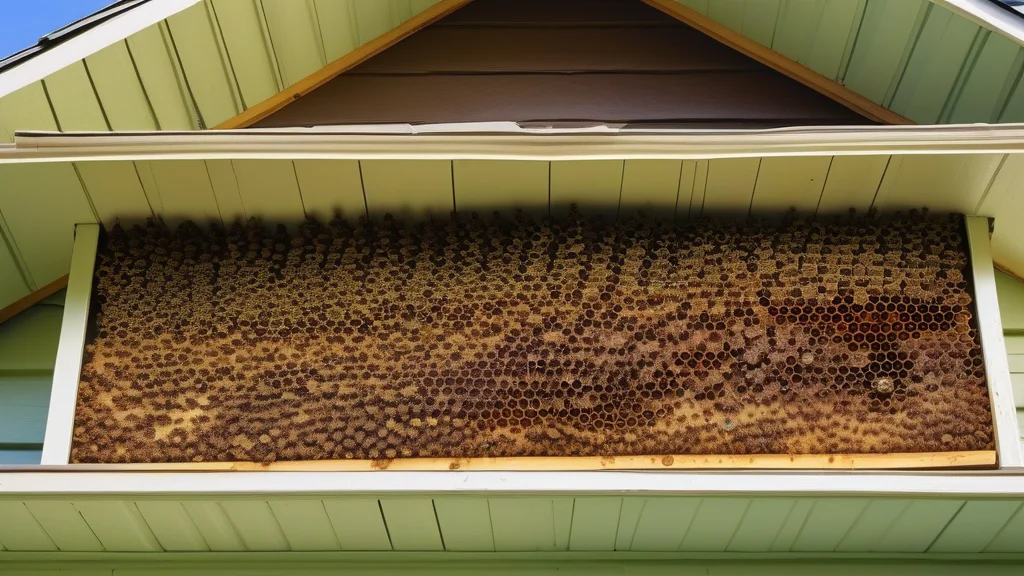
The attic is the single most common location for a major hidden hive. It's dark, undisturbed, and thermally stable. Bees often enter under the eaves where roofing materials meet the fascia board. From there, they build downward into the wall cavities. You might never see a bee inside your home, but the colony could be thriving just inches from your ceiling. The weight of a large honeycomb can stress ceiling joists, and honey seepage can stain ceilings in the rooms below.
Wall Cavities
This is perhaps the most challenging scenario for bee removal. Bees enter through exterior cracks near windows, behind siding, or through weep holes in brick. Once inside the wall, they build comb vertically between the studs. The first sign is often a faint humming sound or bees seen entering and exiting a specific, tiny hole. Over time, honey can seep through interior walls, causing stains and a sweet, persistent odor that attracts ants, rodents, and other insects.
Chimneys and Vents
An uncapped chimney is like a welcome mat for swarming bees. It's a ready-made, protected tube. Bees will often build comb on the smoke shelf or on the chimney walls themselves. Vents for dryers, bathrooms, and stoves are also prime entry points if their covers are damaged or missing. Bee removal from a chimney often requires specialized scaffolding and careful work to avoid collapsing the comb into the firebox.
Other Overlooked Spots
Bees are opportunistic. Don't neglect to check under decks and porches, inside hollow porch columns, within outdoor electrical boxes, and even in gaps between stacked landscaping timbers. Ground-nesting bees are a different species, but their burrowing can undermine patio slabs and pathways.
The most expensive bee removal jobs always start with a hidden hive. Early detection by checking common entry points in spring can save you thousands in removal and repair costs.
Signs of Hidden Bee Activity
You don't need to see a cloud of bees to know you have a problem. Several subtle indicators can point to a hidden colony. Learning these signs can mean the difference between a straightforward removal and a major reconstruction project.
- Increased bee traffic — A steady stream of bees flying to and from a specific, small opening on your house's exterior is the most direct sign. Watch their flight path; they fly in a "beeline" to the hive entrance.
- Staining on walls or ceilings — Brown or yellowish stains that appear damp can indicate honey or hive moisture seeping through your drywall or plaster. This often comes with a distinct, sweet smell.
- Buzzing or humming sounds — A persistent low-frequency hum, especially within walls or from the ceiling, particularly on warm days when bees are most active, is a classic sign of an established hive.
- Dark spots on exterior walls — Over time, bees' constant coming and going leaves a visible "flight stain" or dark smudge around their entrance hole from the oils on their bodies.
- Finding bees indoors — Discovering lethargic or disoriented bees inside your home, especially in upper-floor rooms or near vents, often means there is a hive within the structure. They are finding their way in through interior gaps.
If you notice one or more of these signs, it's time to investigate further. Do not attempt to probe or open the suspected area yourself, as this can agitate the colony. Your next step should be to contact a professional for an assessment. A resource like HomeProMatcher can simplify this process by connecting you directly with local, licensed bee removal specialists who can provide a safe and accurate diagnosis.
Advantages of Early Detection
- Lower removal costs — Smaller colonies are easier and faster for professionals to extract.
- Minimized structural damage — Less honeycomb means less weight and seepage into building materials.
- Prevents secondary infestations — Removing honey and comb quickly stops ants, rodents, and beetles from moving in.
Risks of Delaying Action
- Exponential colony growth — A hive can double in size in a matter of weeks during peak season.
- Major repair bills — Soaked insulation, ruined drywall, and damaged framing become inevitable.
- Increased safety hazard — Large, established colonies are more defensive and pose a greater sting risk.
Why DIY Bee Removal Fails and Is Dangerous
The internet is full of home remedies for bee problems, from spraying insecticides into holes to using smoke and vacuum cleaners. For hidden hives, these approaches are not just ineffective—they're hazardous and can dramatically increase your final costs. The core issue is that DIY methods address only the visible symptom (the bees) and completely fail to address the root cause (the hive and honeycomb inside your structure).
Insecticide sprays often don't reach the queen deep within the comb, leaving the colony to recover. More critically, they kill bees inside the walls, leaving a massive mass of decaying bees, wax, and honey. This becomes a putrid mess that attracts other pests and creates an overwhelming odor. The weight of untended honeycomb can also collapse, causing sudden damage. A proper bee removal process involves physically removing every piece of comb, cleaning the area of pheromones, and sealing the entry points after ensuring all bees are gone—a multi-step procedure far beyond the scope of a can of spray.
Watch Out
Attempting to remove a hive yourself, especially if you have an allergy or are unfamiliar with bee behavior, risks serious injury from multiple stings. Agitated bees may also attack neighbors or pets. Always prioritize calling a licensed professional.
Finding a Professional Bee Removal Service
Choosing the right professional is the most important decision you'll make. Not all pest control companies are equipped for true bee removal; many only offer extermination. You need a specialist who practices live removal and structural repair. Knowing what to look for will ensure you hire someone who solves the problem completely.
- Verify Licensing and Insurance
Any legitimate provider must hold a current state pest control or beekeeper's license (requirements vary). More importantly, they must carry general liability and worker's compensation insurance. This protects you if something goes wrong during the bee removal process. Always ask for proof of both.
- Ask About Their Removal Method
Do they kill the bees or relocate them? Do they physically remove all comb and honey, or just spray and seal? A reputable service will explain their process for extraction, cleaning, deodorizing, and exclusion (sealing entry points). They should guarantee the removal of all attractants to prevent future swarms.
- Get Detailed, Written Estimates
A trustworthy company will provide a written quote that breaks down costs: labor for removal, any necessary carpentry/repair work, and cleanup. Be wary of vague verbal quotes or prices that seem unusually low—they often signal corner-cutting. Get at least three estimates to understand the market rate.
- Check Reviews and Ask for References
Look for reviews specifically mentioning bee removal and structural work. Pay attention to comments about follow-up, cleanliness, and whether the problem recurred. A confident company will provide references from past clients who had similar hidden hive situations.
This vetting process can feel overwhelming, especially when you're dealing with an active infestation. Platforms designed to connect homeowners with pre-screened professionals can save significant time and stress. For instance, HomeProMatcher streamlines this by matching your specific bee removal needs with local specialists who have already been verified for licenses, insurance, and customer ratings, giving you a shortlist of qualified candidates from a single inquiry.
Ideal Bee Removal & Prevention Co.
Specializes in live removal and structural repair for hidden hives. Offers a 2-year guarantee against recolonization, includes thermal imaging to locate hive extent, and partners with local beekeepers for colony relocation. Typical service range starts at $850 for an accessible attic hive, excluding major repairs.
What to Expect From a Professional Bee Removal
Understanding the standard professional process demystifies the service and helps you gauge whether a provider is thorough. A complete bee removal job is a multi-phase operation that extends beyond the day the bees are taken away.
The first step is always a thorough inspection. The technician may use tools like stethoscopes, thermal cameras, or boroscopes to map the hive's size and location within your wall or attic. Once assessed, they will devise a removal plan. For live removals, this often involves creating an access point—such as carefully removing a section of interior drywall or exterior siding—to reach the comb directly. Bees are gently vacuumed into a temporary container, and the comb, laden with honey and brood, is meticulously cut out and placed in frames to be transferred to a beekeeper's apiary.
The subsequent cleanup is arguably more important than the removal itself. All residual honey and wax must be scrubbed from the structure using special enzymes to eliminate pheromones. If this isn't done, the scent will attract a new swarm. Finally, the technician will seal the original entry point with durable materials like steel wool, caulk, or hardware cloth, and repair the access opening they made. The entire process can take 4 to 8 hours for a moderate-sized hive.
Before hiring, ask if the quoted price includes the final repair of the access hole (e.g., patching and painting drywall). Many companies charge removal and repair separately. Getting this in writing prevents surprise charges later.
Understanding Bee Removal Costs
The price for professional bee removal varies widely based on the hive's accessibility, size, and location, as well as regional labor rates. Having realistic cost expectations helps you budget appropriately and spot outliers in your estimates.
The most significant cost drivers are labor intensity and necessary repairs. A hive buried deep between two stories of brick will require more time and potentially scaffolding compared to an attic hive with easy walk-up access. The single biggest variable, however, is the repair work. Many homeowners are shocked to learn that the bee removal itself might cost $1,000, but repairing the damaged siding, insulation, and interior drywall adds another $1,500 to $3,000. Always clarify what the estimate includes.
| Cost Factor | Low Impact | High Impact |
|---|---|---|
| Hive Location | Exterior soffit, ground | Inside chimney, between floors |
| Colony Size | Small, new swarm | Large, mature hive (50,000+ bees) |
| Access Difficulty | Easy attic access | Requires ladder work or scaffolding |
| Repair Needs | Minor sealing of entry point | Full section of siding/drywall replacement |
| Honeycomb Cleanup | Minimal, dry comb | Extensive, melted honey in insulation |
While cost is a major factor, the cheapest option is rarely the most economical in the long run. Incomplete removal or poor cleanup will lead to recurring problems, attracting new swarms and causing persistent damage, making that initial savings a very expensive mistake.
Frequently Asked Questions
Frequently Asked Questions
Act immediately. Bee colonies grow exponentially during warm months. A delay of even a few weeks can allow the hive to double in size, making removal more complex, dangerous, and expensive. Contact a professional for an assessment within days of confirmation.
Typically, no. Most standard policies exclude damage from pests, insects, and vermin. The removal cost and repairs to your structure are almost always the homeowner's responsibility. However, if the weight of a hive causes a sudden, accidental collapse (like a ceiling falling), that resulting damage might be covered. Check your policy details carefully.
Extermination kills the bees but leaves the hive, honey, and wax in your walls. Bee removal is the physical extraction of the entire colony and all comb, followed by cleaning and sealing. Removal is the only method that prevents future problems and avoids the secondary issues of rotting honeycomb.
Yes, and this is a preferred method for many reputable companies. Live removal techniques allow the colony to be captured and given to a local beekeeper. However, this is more labor-intensive and may cost slightly more than extermination, but it supports the ecosystem and is often more effective for preventing recurrence.
Prevention is about denying access. Conduct seasonal inspections of your home's exterior. Seal cracks in mortar, siding, and roofing with high-quality caulk or mortar. Install fine-mesh hardware cloth behind attic vents and over chimney caps. Repair damaged soffits and fascia promptly. Making your home less attractive saves you from needing bee removal later.