- Understanding the Enemy: The Ant Colony as a Superorganism
- The Common Invaders: Identifying Your Ant Adversary
- Strategies and Tactics: Your Ant Control Battle Plan
- Hiring a Professional: Your General in the Ant War
- The Cost of War: Budgeting for Professional Ant Control
- Preventing Reinvasions: Securing Your Perimeter
- Frequently Asked Questions
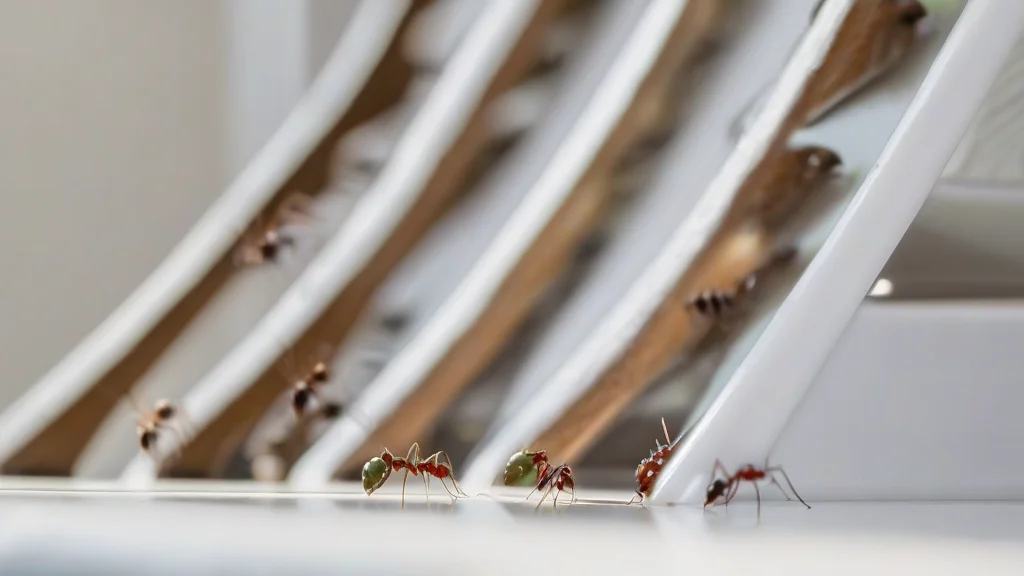
When a line of tiny, determined insects marches across your kitchen counter, you’re not just seeing a few ants—you’re witnessing the frontline of a highly organized, relentless colony. Ant control is less about killing a few stragglers and more about declaring war on a sophisticated society with a single mission: exploit your home’s resources. The keyword for homeowners in this battle isn't just elimination; it's strategic management. Effective ant control requires understanding the enemy’s tactics, strengths, and weaknesses. This article will break down why these pests are nature’s ultimate home invaders and provide a comprehensive guide to winning the war, including when and how to call in professional reinforcements.
Every year, millions of homeowners face ant infestations, spending countless hours and dollars on solutions that often fail. The problem isn't the effort; it's the approach. Treating ants as a simple nuisance is a critical mistake. Their complex social structure means that for every ant you see, hundreds more remain hidden, and a queen can repopulate an army in weeks. True ant control demands a shift in perspective. You must think like a general, identifying the species, targeting the colony’s heart, and fortifying your home’s defenses. Let’s explore the battlefield.
Understanding the Enemy: The Ant Colony as a Superorganism
An ant colony operates as a single entity, a superorganism, where each member has a specialized role dedicated to the survival and growth of the whole. The queen’s sole job is reproduction, laying thousands of eggs to sustain the colony. Worker ants, the ones you see foraging, are responsible for gathering food, caring for the young, and defending the nest. Soldier ants, present in some species, have larger heads and mandibles for combat. This division of labor makes them incredibly efficient and resilient. Killing a few workers does nothing to the colony’s long-term survival; the queen simply produces more. This is why DIY ant control often fails—it addresses the symptom (the foragers) but not the cause (the nest).
Their communication is another formidable weapon. Ants leave pheromone trails, chemical signals that direct other workers to food sources. That line of ants on your floor is following a highway laid down by the first scout. Breaking this trail is temporary; the real goal is to use it against them. Effective baits exploit this by being carried back along the trail to the nest, poisoning the queen and brood. Understanding this behavior is the first step in transitioning from reactive killing to strategic ant control. You’re not just dealing with insects; you’re disrupting a network.
Important
Never spray insecticide directly on a trail of ants you see indoors. This kills the visible workers but severs the pheromone trail, scattering the colony and making it harder to deliver bait to the hidden queen. It can actually make the infestation worse.
The Common Invaders: Identifying Your Ant Adversary
Not all ants are created equal, and your ant control strategy must be tailored to the species. Misidentification leads to wasted time and money. Here are the most common household invaders:
- Odorous House Ants — Named for the rotten coconut smell they emit when crushed. They love sweets and are one of the most common indoor pests, often nesting in wall voids.
- Carpenter Ants — These large, black ants excavate moist, decaying wood to create nests. They don’t eat wood but can cause significant structural damage over time.
- Pavement Ants — Small, dark brown/black ants typically found nesting under sidewalks, driveways, and foundation slabs. They enter homes seeking greasy or sweet foods.
- Pharaoh Ants — Tiny, light yellow ants that are a major problem in hospitals and multi-unit buildings. They are notoriously difficult to eradicate with standard sprays because their colonies bud, splitting into multiple queens if threatened.
- Argentine Ants — Form massive “supercolonies” with multiple queens. They are highly aggressive towards other ant species and can overwhelm an area, requiring large-scale ant control efforts.
Correct identification guides your bait choice (protein vs. sugar), helps locate the nest (indoors vs. outdoors), and determines the severity of the threat. For example, a carpenter ant sighting warrants an immediate professional inspection for moisture damage, while a trail of odorous house ants might be managed with strategic baiting.
The single most important step in effective ant control is correctly identifying the ant species. The wrong bait or treatment method will fail, wasting your money and allowing the colony to grow.
Strategies and Tactics: Your Ant Control Battle Plan
Winning the war requires a multi-pronged campaign. A successful ant control plan integrates sanitation, exclusion, baiting, and, if necessary, targeted chemical treatments. Relying on just one method is like defending a castle by only guarding the front gate. Your plan should progress from prevention to active elimination.
Step 1: Sanitation and Denial
Ants are attracted to resources. Your first line of defense is to make your home less appealing. This means impeccable sanitation. Wipe down counters immediately after meals, store all food—especially pet food, sweets, and fruit—in airtight containers, and take out the trash regularly. Fix leaky faucets and pipes, as moisture attracts many ant species. This step doesn't kill ants, but it removes the incentive for scouts to report back to the colony, making your other efforts more effective. Think of it as cutting off the enemy’s supply lines.
Step 2: Exclusion and Fortification
Next, seal the entry points. Ants can enter through a crack the width of a credit card. Conduct a thorough inspection of your home’s exterior. Use a quality silicone or acrylic latex caulk to seal cracks around windows, doors, utility lines, and foundation gaps. Install door sweeps and repair damaged window screens. For a persistent problem, applying a residual insecticide barrier around the home’s perimeter can be effective, but this is often best left to professionals for safety and efficacy. This physical ant control barrier is your permanent wall.
Use a bright flashlight at night to help spot ant trails and entry points. Ants are often more active after dark, and the light will make their movements easier to track back to a crack or hole.
Step 3: Strategic Elimination with Baits
When you see ants indoors, baiting is your most powerful weapon. Baits contain a slow-acting toxin mixed with an attractive food source (either protein or sugar-based). Workers carry the bait back to the nest, sharing it with the queen and larvae. This process can take several days to two weeks, but it targets the colony’s core. Patience is key. Place baits directly in the path of ant trails, but do not disturb them. Avoid using sprays or cleaning products near bait stations. If you’ve identified the species correctly, you should see ant activity increase at the bait (a good sign) and then gradually disappear.
Hiring a Professional: Your General in the Ant War
There comes a point when DIY ant control is no longer sufficient. If you have a large-scale infestation, a recurring problem, or a destructive species like carpenter or pharaoh ants, hiring a professional pest control company is a smart investment. A pro brings expertise, stronger tools, and a guarantee. But not all companies are equal. Knowing how to select the right one protects your home and your wallet.
- Verify Licensing and Insurance
Any legitimate pest control professional must be licensed by your state’s Department of Agriculture or equivalent. Ask for their license number and verify it online. Also, ensure they carry liability insurance and workers’ compensation. This protects you if something goes wrong on your property.
- Get a Detailed Inspection and Written Quote
A reputable technician will perform a thorough inspection—inside and out—before quoting a price or treatment. The written quote should detail the species identified, the proposed treatment plan (products and methods), the number of visits, the total cost, and the terms of any guarantee. Be wary of anyone who gives a price over the phone without seeing the problem.
- Ask the Right Questions
Don’t be shy. Ask about the specific chemicals they use and their safety profile for pets and children. Inquire about required preparation (e.g., moving furniture, vacating the home) and what follow-up looks like. A good company will be transparent and educational.
- Check Reviews and References
Look beyond the company’s own website. Check third-party review sites like Google, Yelp, and the Better Business Bureau. Ask the company for references from recent clients with similar ant problems. A service like HomeProMatcher simplifies this by connecting you with pre-screened, licensed local pros who have been vetted, saving you from endless searches and cold calls.
Did You Know?
Many professional pest control companies now use Integrated Pest Management (IPM) strategies. IPM focuses on long-term prevention and uses a combination of methods (inspection, monitoring, habitat modification, and targeted chemicals) with the least possible hazard to people and the environment. Ask if the company follows IPM principles.
The Cost of War: Budgeting for Professional Ant Control
Understanding the cost of professional ant control helps you budget and evaluate quotes. Prices vary widely based on your location, the severity and type of infestation, the size of your home, and the company’s pricing model.
Most companies offer ongoing service plans, which include periodic inspections and treatments to prevent future infestations. These typically range from $40 to $70 per month or $300 to $600 per year. While an added expense, a plan can be cost-effective for homes in areas prone to chronic ant problems. Always compare the scope of service, guarantee details, and contract cancellation terms between plans. Remember, the cheapest option is rarely the best value in pest control; effective ant control saves money by preventing property damage and repeated treatments.
What users say
Homeowners consistently praise clear explanations, thorough inspections, and long-lasting results. Many note that the pros identified entry points and conditions they had missed.
Why we recommend this path
For complex or persistent ant problems, a qualified local professional provides the fastest, most reliable solution. Platforms that pre-screen providers eliminate the risk and hassle of finding a trustworthy expert on your own, ensuring you get a pro trained in modern ant control strategies.
Advantages
- Expert Identification — Correctly diagnoses ant species and nest locations.
- Advanced Tools & Materials — Access to professional-grade baits and treatments not available retail.
- Long-Term Guarantee — Most services include a callback period if ants return.
Disadvantages
- Higher Upfront Cost — More expensive than DIY store-bought products.
- Scheduling Required — You need to be home for the inspection and treatment.
- Chemical Use — Some homeowners prefer completely chemical-free approaches.
Preventing Reinvasions: Securing Your Perimeter
After winning the battle, your goal is to win the peace. Ant control is an ongoing process of vigilance and maintenance. Even after professional treatment, your habits and home maintenance are the final layer of defense. Make the exterior of your home inhospitable. Trim tree branches and shrubs so they don’t touch your siding or roof, providing ant bridges. Store firewood and building materials away from the house. Keep mulch layers thin near the foundation, as thick mulch retains moisture and harbors insects. Regularly clean gutters to prevent moisture accumulation that attracts carpenter ants.
Inside, maintain the sanitation and exclusion habits you established. Periodically re-check sealed cracks and reapply caulk as needed. Consider using desiccant dusts (like diatomaceous earth) in attics, crawlspaces, or wall voids as a non-chemical barrier—though application in these areas is often a professional task. The most effective long-term ant control is a partnership: professional expertise to handle acute invasions and homeowner diligence to maintain a fortress that’s hard to penetrate.
Ultimate victory in ant control is measured in months and years without sightings, not just days. It requires a combination of professional strategy for elimination and homeowner commitment to prevention.
Frequently Asked Questions
Frequently Asked Questions
Sprays typically only kill the ants you see. If you haven't eliminated the queen and the nest, the colony simply sends out more workers. Sprays can also break pheromone trails, causing the colony to scatter and become harder to eradicate. For lasting ant control, you need a method like baiting that targets the colony's core.
Vinegar and cinnamon can disrupt pheromone trails and deter ants temporarily, acting as a repellent. However, they do not kill ants or affect the colony. They are a short-term masking solution, not a true eradication method. For a serious infestation, they are insufficient.
Look for large (⅜ to ½ inch), black or dark brown ants indoors, especially at night. You might also find frass—a sawdust-like material of wood shavings and insect parts—piling up below wooden beams, window sills, or door frames. Hearing faint rustling noises inside walls can also be a sign. Carpenter ant infestations require immediate professional assessment.
Extermination implies a one-time, total kill event. Ant control is a more accurate term because it encompasses the ongoing process of management: monitoring, prevention, and targeted treatment. Due to ants' biology and environmental factors, complete, permanent eradication is often difficult; control focuses on keeping populations below problematic levels.
Call a pro if you have a large, visible infestation that DIY methods haven't touched in two weeks, if you suspect carpenter ants (due to property damage risk), if you have pharaoh ants (which require special baits), or if the ants keep returning season after season. Professionals have the tools and knowledge for complex ant control scenarios.