The moment you step into a basement lake created by a failed sump pump, panic is a natural first reaction. Your mind races with questions about damage, cost, and what to do next. The single most critical decision you make in the next hour is securing professional emergency water removal services. Time is the enemy when water invades your home; every minute allows moisture to seep deeper into drywall, flooring, and structural cavities, exponentially increasing the damage and the eventual repair bill. This isn't a DIY mop-up job—it's a race against mold, rot, and secondary damage that requires industrial-grade equipment and certified expertise.
Acting swiftly and correctly in the first 60 minutes can mean the difference between a manageable restoration project and a catastrophic, long-term loss. This guide provides a clear, step-by-step action plan designed to minimize damage while you wait for the pros. We’ll walk you through immediate safety steps, how to vet and hire a reliable emergency water removal company, what to expect with costs and insurance, and how to ensure this nightmare doesn’t repeat itself. Knowing exactly what to do transforms panic into purposeful action.
The 60-Minute Immediate Action Plan
Before you even pick up the phone to call a service, your personal safety is paramount. Assume that any standing water could be electrically charged if it's contacting outlets or appliances. Do not enter flooded areas until you are certain the power is off. If you cannot safely reach your main electrical panel, call an electrician or the fire department immediately. Once the area is deemed safe from electrocution risk, your focus shifts to damage mitigation. The goal here is not to solve the problem yourself, but to create a holding pattern that limits the spread of damage until professional emergency water removal crews arrive.
Start by identifying and stopping the water source if possible. In the case of a sump pump failure, this might mean unplugging the faulty unit and, if you have one, activating a backup pump. If the water is from a burst pipe, locate your home's main water shut-off valve and turn it off. This step is crucial; you cannot begin to remove water if more is constantly pouring in. Next, remove what you can. Prioritize high-value, portable items like electronics, important documents, and area rugs. Do not attempt to move heavy furniture like sofas or cabinets—they can be addressed by the professionals with proper equipment.
Critical Safety Warning
Never enter standing water before turning off electricity to the affected area. Water and electricity are a deadly combination. If in doubt, wait for professionals. Also, be aware that floodwater can be contaminated with sewage or chemicals; wear protective boots and gloves if you must be in the area.
- Secure Safety & Stop the Source
Turn off the electricity at the breaker panel for the flooded area. Locate and stop the water intrusion—shut off the main water valve for pipe bursts or disconnect a failed sump pump. Your personal safety is the absolute first priority.
- Document Everything for Insurance
Use your phone to take extensive photos and videos of the water level, the failed sump pump, damaged belongings, and the overall area. Do this before moving anything. This visual evidence is critical for your insurance claim.
- Call a Professional Emergency Water Removal Service
This is not a plumber. You need a certified water damage restoration company that offers 24/7 emergency water removal. Start this call while you perform other steps. The faster they are dispatched, the less damage occurs.
- Promote Initial Airflow
If it is safe to do so and outdoor conditions permit (low humidity), open windows and doors in the affected area. Use fans to circulate air, but do not use standard home fans if mold is already suspected. The goal is to begin the drying process.
The first call you make should be to a professional emergency water removal company, not just a plumber. Restoration experts have the specific equipment and protocols to extract water, dry structures, and prevent mold, which is the true long-term threat.
Why Professional Emergency Water Removal is Non-Negotiable
Many homeowners underestimate the complexity of water damage, thinking a wet-dry vacuum and some fans will suffice. This misconception can lead to tens of thousands of dollars in hidden damage. Professional emergency water removal is a scientific process focused on rapid water extraction, comprehensive drying, and moisture verification. Certified technicians use thermal imaging cameras to detect water hidden inside walls and under flooring—moisture you cannot see. They then deploy industrial-grade air movers, dehumidifiers, and injectidry systems to draw moisture out of building materials, not just off their surfaces.
The stakes for improper drying are staggeringly high. Mold spores are everywhere, and they only need 24 to 48 hours of consistent moisture to colonize. Once mold takes hold inside a wall cavity or subfloor, remediation costs can triple, and health issues like respiratory problems and allergies can arise. A professional service doesn't just remove the water you see; they create a controlled drying environment and use moisture meters to scientifically verify that all structural materials have returned to safe, dry standards. This documented process is also what your insurance company requires for a smooth claim.
Advantages of Professional Service
- Prevents Catastrophic Mold Growth — Industrial equipment removes moisture from the very core of building materials, not just the surface.
- Documents the Process for Insurance — Provides moisture logs, photos, and reports that are essential for claim approval.
- Saves Time and Reduces Stress — Handles the entire complex process, from extraction to drying to final verification.
- Preserves Structural Integrity — Proper drying prevents wood rot, drywall deterioration, and foundation issues down the line.
Risks of a DIY Approach
- Hidden Moisture Leads to Mold — Surface drying leaves water in wall studs and subfloors, creating a perfect mold incubator.
- Insurance Claim Denials — Lack of proper documentation and IICRC-standard methods can give insurers grounds to deny coverage.
- Increased Long-Term Cost — What seems like savings now often leads to massive repair bills for mold remediation and structural repairs in 6-12 months.
- Health Hazards — Exposure to contaminated water or uncontrolled mold spores poses significant health risks.
What to Expect When the Pros Arrive
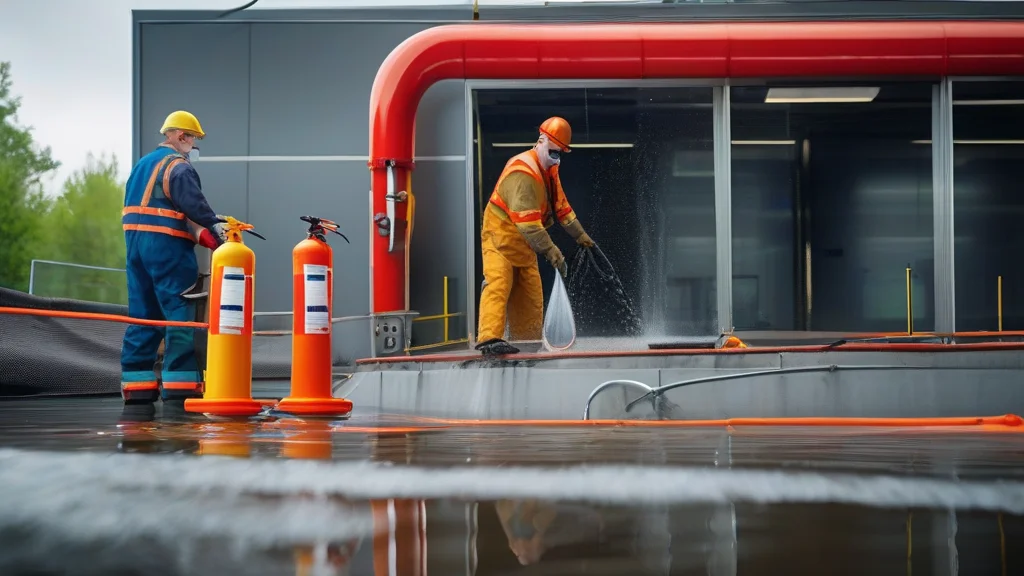
A reputable emergency water removal team will arrive promptly and perform an immediate assessment. They will present you with a detailed scope of work and an estimate. Reputable companies follow the IICRC (Institute of Inspection, Cleaning and Restoration Certification) S500 standard, which is the industry benchmark. The process typically follows these steps: First, they extract all standing water using truck-mounted or portable extractors. Next, they remove damaged materials that cannot be salvaged, like saturated drywall or insulation. Then, they set up a drying chamber with air movers and dehumidifiers, and they will monitor moisture levels daily until the area is certified dry.
Did You Know?
The IICRC S500 standard is the bible for professional water damage restoration. Hiring a company that adheres to these guidelines ensures the work is done correctly and is more likely to be accepted by your insurance provider. Always ask if a company is IICRC-certified.
Hiring the Right Emergency Water Removal Team
In a panic, it’s tempting to call the first company that appears in a search ad. This is how homeowners get overcharged or receive subpar service. You need a vetted, reliable partner. Start by verifying licensing and insurance; any legitimate emergency water removal company should be licensed in your state and carry both general liability and worker's compensation insurance. Ask for proof. Next, check for certifications, specifically from the IICRC. A Water Restoration Technician (WRT) certification is a strong indicator of trained expertise.
Always get at least three detailed estimates. Be wary of quotes given over the phone without an inspection—a legitimate assessment requires an in-person look. The estimate should break down costs for water extraction, drying time (often calculated per day for equipment rental), materials removal, and any antimicrobial treatments. Ask about their communication process during the job and who your point of contact will be. Read recent online reviews, but look for patterns rather than isolated complaints. Consistent mentions of poor communication or hidden fees are major red flags.
What users say
Homeowners report saving significant time and stress during emergencies by getting directly connected to local, licensed pros without the hassle of endless calls and vetting.
Why we recommend this service
In a water emergency, you don't have time to cold-call 10 companies. A service like HomeProMatcher pre-screens local emergency water removal companies for licensing, insurance, and reputation, then connects you directly with a qualified pro. It eliminates the guesswork when you're most vulnerable.
- Free, no-obligation matching service.
- All providers are locally owned and pre-vetted.
- Single point of contact saves hours of stressful searching.
- You are matched with a pro; you still should review the quote.
- Service area may be limited to participating local providers.
Red Flags to Avoid When Hiring
Knowing what not to accept is as important as knowing what to look for. Be extremely cautious of any company that demands full payment upfront before work begins. A reputable firm will typically require a deposit to schedule the work, with the balance due upon completion and your satisfaction. Avoid companies that use high-pressure sales tactics or claim to have "special pricing just for you if you sign today." Their focus should be on solving your problem, not closing a deal. Be wary of quotes that seem drastically lower than others; this often means they plan to cut corners, use inferior equipment, or will hit you with hidden fees later.
- Demands Full Payment Upfront — Legitimate companies work with insurance and require a deposit, not full pre-payment.
- No Physical Address or Local Presence — "Fly-by-night" operators often use only a PO box or mobile number.
- Vague or Verbal-Only Estimates — Insist on a detailed, written scope of work and contract.
- Pressure to Sign Immediately — Ethical companies give you time to review their proposal and check their references.
- Unmarked Trucks or Lack of Branding — Professional restoration firms typically have branded vehicles and uniforms.
Understanding Costs and Navigating Insurance
The cost of emergency water removal and subsequent drying is not a fixed number; it's a variable based on the volume of water, the affected square footage, the type of water (clean, gray, or black), and the required drying time. On average, homeowners can expect to pay between $1,200 and $5,000 for professional water extraction and drying of a residential basement. This range can spike significantly if structural materials need replacement or if mold remediation becomes necessary. Most companies charge a combination of a service fee, a per-hour or per-day rate for equipment, and costs for materials and labor.
Your homeowner's insurance policy is your financial shield, but you must understand its terms. Most standard policies cover "sudden and accidental" water damage, like that from a burst pipe or a sump pump failure. However, they typically exclude damage from flooding (which requires separate flood insurance) or from lack of maintenance. The moment you discover the damage, you should call your insurance company to file a claim. They will assign an adjuster to assess the loss. It is highly advantageous to have your chosen emergency water removal company present during the adjuster's inspection. They can speak the same technical language and advocate for the necessary scope of work.
Ask your emergency water removal company if they work directly with insurance providers and can handle the "assignment of benefits." This means they bill your insurance company directly, reducing your out-of-pocket expenses to just your deductible. This streamlines the process dramatically.
Beyond the Crisis: Preventing Recurrence
Once the immediate crisis is over and your home is dry, the most important long-term step is ensuring your sump pump system is reliable. A single pump failure should be a wake-up call. Invest in a quality battery backup system that automatically kicks in during a power outage—the most common cause of sump pump failure. Consider installing a water alarm in the sump pit that alerts you the moment water rises above a safe level. Schedule an annual inspection and maintenance check for your primary pump, typically in early spring before the heavy rains.
Look beyond the pump itself. Ensure your downspouts extend at least six feet away from your foundation, directing rainwater away from your home. Grade the soil around your foundation so it slopes away, preventing surface water from pooling near basement walls. Inside, avoid storing valuable or irreplaceable items directly on the basement floor. Use shelving and plastic storage bins. Taking these proactive measures dramatically reduces the risk of needing emergency water removal again in the future. It’s an investment in peace of mind that protects your home’s value and your family’s health.
Your response to a sump pump failure defines the outcome. Swift action to secure professional emergency water removal, combined with informed hiring practices and smart insurance navigation, turns a disaster into a manageable event. The ultimate goal is to restore your home safely and prevent history from repeating itself.
Frequently Asked Questions
Immediately. Mold can begin growing within 24-48 hours. The goal is to have professionals on-site extracting water within a few hours of the discovery. Every hour of delay allows water to wick deeper into porous materials, increasing damage and cost.
In most cases, yes. Standard homeowner's policies typically cover "sudden and accidental" discharge from a plumbing system or household appliance, which includes a sump pump that fails unexpectedly. However, damage due to lack of maintenance or external flooding is usually excluded. Always review your specific policy and file a claim promptly.
A plumber fixes the source of the water leak (e.g., repairs the broken pipe or replaces the sump pump). A water damage restoration company specializes in the aftermath: extracting standing water, drying the structure, preventing mold, and restoring the property. For a major event, you will likely need both, but the emergency water removal team is your first call to mitigate damage.
It depends on the extent of saturation, the materials affected, and indoor humidity levels. For a moderately flooded basement, the intensive drying phase with industrial equipment typically takes 3 to 5 days. Professionals use moisture meters to scientifically verify when all structural materials are dry, not just a visual assessment.
Consumer-grade equipment is insufficient for serious water damage. It cannot move the volume of air or extract the amount of moisture needed to dry wall cavities, subfloors, and framing lumber. This approach often leads to "hidden dry" surfaces with wet interiors, which is the perfect recipe for widespread mold growth and structural decay.